
HMRC Tax Receipts 2025/26 – A Quick Summary
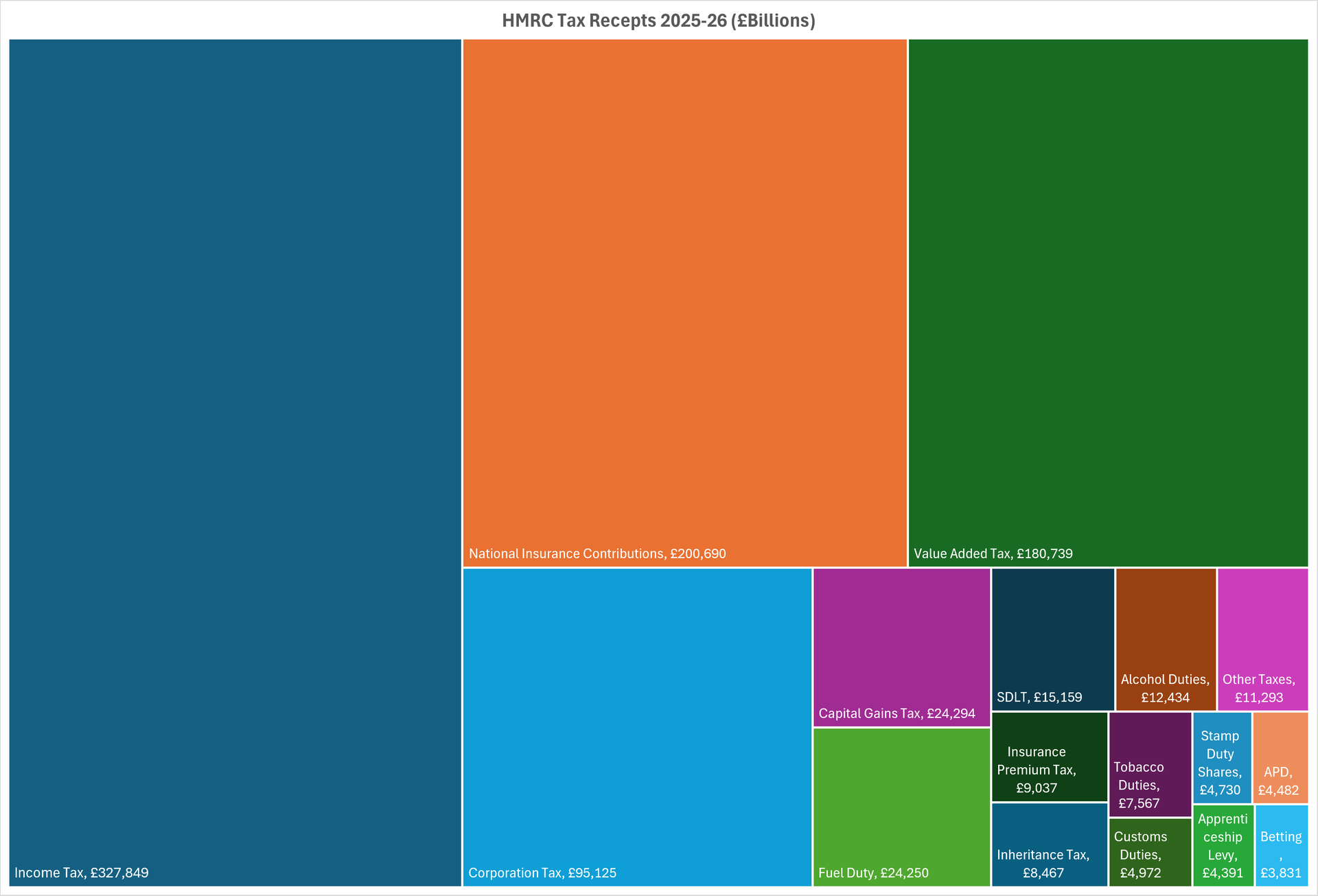
HMRC’s latest tax receipt figures provide a useful overview of where Government revenues are generated and highlight the taxes that continue to have the greatest impact on businesses, employers and company owners.
Total receipts collected by HMRC during the year amounted to £938.8 billion, an increase of £80.2 billion compared with £858.6 billion in 2024/25. While income taxes and VAT remain the largest contributors to overall receipts, the latest data also shows continued growth in business-related taxes, including Corporation Tax and employer National Insurance contributions.
Total HMRC Receipts
HMRC receipts are grouped into several broad categories:
| Tax Category | 2025/26 Receipts | 2024/25 Receipts | Increase/Decrease |
|---|---|---|---|
| Income Tax, CGT and NICs | £552.8bn | £489.0bn | + 13 % |
| VAT | £180.7bn | £171.0bn | + 5.7 % |
| Business Taxes | £101.4bn | £97.5bn | + 4 % |
| Excise Duties | £61.6bn | £61.5bn | + 0.2 % |
| Stamp Taxes | £25.1bn | £23.1bn | + 8.7 % |
| Other Taxes and Receipts | £17.2bn | £16.5bn | + 4.2 % |
Income Tax and National Insurance continue to account for the largest proportion of receipts, representing almost 59% of the total collected during the year.
Income Tax, Capital Gains Tax and NICs Increase at a Faster Rate
One of the most significant developments for businesses during 2025/26 was the increase in employer National Insurance liabilities.
Combined receipts from Income Tax, Capital Gains Tax and National Insurance Contributions totalled £552.8 billion, compared with £489.0 billion in 2024/25.
| Tax Category | 2025/26 Receipts | 2024/25 Receipts | Increase/Decrease |
|---|---|---|---|
| Income Tax | £327.8bn | £302.8bn | + 8.3 % |
| National Insurance Contributions | £200.7bn | £172.5bn | + 16.3 % |
| Capital Gains Tax | £24.3bn | £13.7bn | + 77.4 % |
A substantial proportion of this increase can be attributed to changes introduced from April 2025, including an increase in the employer National Insurance rate from 13.8% to 15%.
For employers, National Insurance remains one of the largest employment-related costs outside of salaries and pension contributions. The increase in receipts during 2025/26 reflects both policy changes and wider wage growth.
VAT Receipts Continue to Grow
VAT generated £180.7 billion during the year, compared with £171.0 billion in 2024/25.
For many businesses, VAT remains one of the most significant taxes administered on behalf of HMRC. Although VAT is ultimately borne by consumers, businesses are responsible for collecting, accounting for and remitting VAT through the VAT system.
The increase in VAT receipts reflects a combination of factors, including, higher consumer spending, inflationary increases in prices and growth in the overall VAT tax base.
VAT represented approximately 19% of all HMRC receipts collected during 2025/26.
Business Taxes Remain a Major Revenue Source
Business taxes generated £101.4 billion during 2025/26, an increase from £97.5 billion in the previous year.
| Tax Category | 2025/26 Receipts | 2024/25 Receipts | Increase/Decrease |
|---|---|---|---|
| Corporation Tax | £95.1bn | £90.9bn | + 4.6 % |
| Bank Levy & Bank Surcharge | £2.6bn | £2.3bn | + 13 % |
| Digital Services Tax | £0.9bn | £0.8bn | + 12.5 % |
| Energy Profits Levy | £2.5bn | £2.9bn | - 13.8 % |
| Other Business Taxes | £0.26bn | £0.57bn | - 54.4 % |
Corporation Tax receipts have increased significantly over recent years following the increase in the main Corporation Tax rate to 25% for companies with profits above the upper threshold.
While HMRC's annual bulletin groups these taxes together, the overall trend indicates that business taxation continues to represent an increasingly important source of revenue, accounting for approximately 11% of total HMRC receipts during 2025/26.
Stamp Taxes and Property Transactions
Stamp Taxes generated £25.1 billion during the year.
| Tax Category | 2025/26 Receipts | 2024/25 Receipts | Increase/Decrease |
|---|---|---|---|
| Stamp Duty Land Tax (SDLT) | £15.2bn | £13.9bn | + 9.4 % |
| Stamp Duty Reserve Tax | £9.0bn | £8.2bn | + 9.8 % |
| Stamp Duty on Shares | £0.8bn | £0.9bn | - 12.5 % |
| Annual Tax on Enveloped Dwellings | £0.1bn | £0.1bn | 0 % |
Receipts remain below the peak levels seen during the post-pandemic property market boom but continue to represent a significant source of Government revenue.
For businesses involved in commercial property transactions, acquisitions and investment activity, stamp taxes remain an important consideration when assessing transaction costs.
Excise Duties
HMRC collected £61.6 billion in excise duties during the year.
| Tax Category | 2025/26 Receipts | 2024/25 Receipts | Increase/Decrease |
|---|---|---|---|
| Fuel Duty | £24.3bn | £24.4bn | - 0.4 % |
| Alcohol Duty | £12.4bn | £12.6bn | - 1.6 % |
| Tobacco Duty | £7.6bn | £7.9bn | - 3.8 % |
| Air Passenger Duty | £4.5bn | £4.1bn | + 9.8 % |
| Betting & Gaming Duties | £3.8bn | £3.6bn | + 5.6 % |
| Insurance Premium Tax | £9.0bn | £8.9bn | + 1.1 % |
Although these taxes affect consumers directly, they remain particularly relevant to businesses operating within the retail, hospitality, transport and logistics sectors.
Excise duty receipts have remained relatively stable in recent years compared with some of the larger growth seen in income taxes and National Insurance receipts.
What Can Businesses Take from the Latest Figures?
The latest HMRC data highlights several themes that are relevant to business owners and employers.
Firstly, employment-related taxes continue to account for the largest share of Government revenue. The increase in employer National Insurance contributions during 2025/26 has contributed significantly to overall growth in receipts and has increased employment costs for many organisations.
Secondly, Corporation Tax remains a major contributor to business tax revenues. Since the increase in the main Corporation Tax rate, receipts from company taxation have remained an important component of overall Government revenues.
Thirdly, VAT continues to generate substantial receipts and remains one of the most significant compliance obligations for UK businesses.
Finally, environmental and sector-specific levies continue to expand the range of taxes affecting businesses beyond the more familiar Corporation Tax, VAT and PAYE systems.
As tax policy continues to evolve, HMRC's annual receipts bulletin provides a useful indication of where Government revenues are being generated and which taxes are having the greatest impact on UK businesses and employers.





Friend Partnership is a forward-thinking firm of Chartered Accountants, Business Advisers, Corporate Finance and Tax Specialists, based In The UK
Share this page: